11 May 2026
As Europe works toward a climate neutral economy, green hydrogen is expected to play an increasingly important role in future energy systems. With hydrogen technologies advancing and demand for skilled professionals growing, Hanze University of Applied Sciences is launching a new vocational course titled Developing Business Cases in the Hydrogen Value Chain.
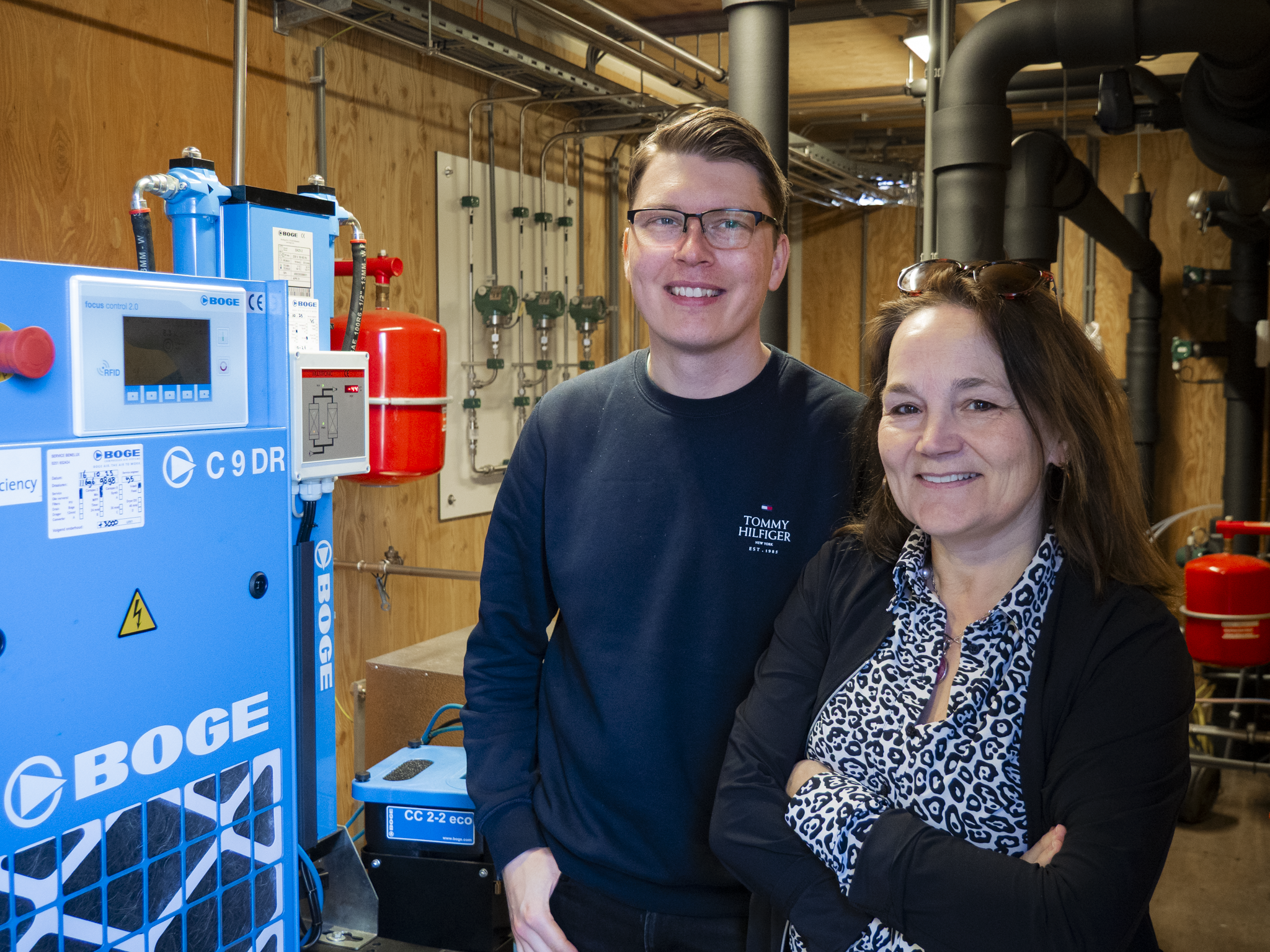
The course is developed by Entrance within the European H2CoVE project. Its goal is to provide both students and working professionals with practical tools and relevant knowledge to contribute to the hydrogen economy. Course developers Myriam Jansen and Steffen Eriksen explain why the programme was created and what participants can expect.
Although large scale deployment of green hydrogen is still in development, its impact on decarbonisation is already clear. Hydrogen has strong potential in sectors such as industry and transport, as well as in future energy systems. Jansen explains the motivation behind the course: “We believe hydrogen will play a bigger role in society in the future. We want to get ahead of the change and make sure students and professionals are already adequately trained.”
Eriksen emphasizes the practical focus of the programme: “In the case of this course, it will give students and professionals the tools to develop business cases to advance the hydrogen economy.”
The course is designed for two main groups. One group consists of Bachelor students at Hanze who will soon enter the labour market. These students need a solid understanding of how the hydrogen value chain works. The second group includes professionals who already work in energy related fields and are transitioning toward sustainable energy solutions.
Jansen explains this dual focus: “On the one hand, we have Bachelor students at the Hanze, who will graduate in a few years and who will need some knowledge about the hydrogen value chain to prepare them for the future. On the other hand, we have professionals that are already working in the field that should make the transition to more sustainable energy sources.”
Professionals from the gas industry show particular interest in hydrogen. Eriksen notes: “For them, it is quite relatable in terms of infrastructure. This course could be a stepping stone for them.”
Developing Business Cases in the Hydrogen Value Chain is structured around four modules. Together, these modules guide participants toward creating a complete hydrogen related business case. Professionals can follow individual modules, but completing all four is required to earn a micro credential.
“At the end of the course, participants should be able to develop their own business case in the hydrogen value chain,” Eriksen says. “The learning outcomes of each separate module are tied to this goal. They learn everything from the general principles about business case development, what are linear and circular value chains, how to assess financials, and some regulatory aspects regarding hydrogen.”
The course allows professionals to work on their own real world ideas. Jansen highlights the added value: “The great thing is, professionals can bring in their own business case, meaning they complete the course with a ready to use case to bring back to their own company or employer.” Hanze students will develop a fictional case that helps them build skills they can apply later in their careers.
The course was created in close cooperation with partners within the H2CoVE network. Input from partner companies helped identify relevant skills gaps in the hydrogen labour market. Educational partners in Austria and Estonia contributed feedback and expertise.
“Fachhochschule Kufstein Tirol and Taltech Virumaa College are developing courses in a similar field, so they are able to provide targeted feedback,” Eriksen says. Jansen adds: “What really inspired me is that we have been able to bring together the right people to build this course. Despite full agendas, people continue to make time for these meaningful developments.”
The course will be piloted for students in Semester 1 of the 2026 to 2027 academic year. It will carry 5 ECTS and align with EQF levels 5 to 6. A pilot version for professionals is planned for 2027, including the opportunity to earn a micro credential after completing all modules.
With this new course, Entrance aims to prepare both current and future professionals to actively shape the hydrogen economy.