23 March 2026
By Dr Beata Kviatek
“How can European regions accelerate the energy transition when each operates with different priorities, capacities, and governance structures?” This guiding question framed the STARS EU Living Lab kick off in Belfort and Besançon, hosted by Université Marie & Louis Pasteur (UMLP). Over two days, academics, regional authorities, students, and industry partners examined how cross regional cooperation can strengthen Europe’s shift toward more sustainable and resilient energy systems.
The opening session brought together a broad spectrum of perspectives, with contributions from:
Each highlighted how their regions mobilise research, industry, and policy frameworks to advance the energy transition. Despite different starting points, the common message was clear: governance and cooperation are as crucial as technology itself.
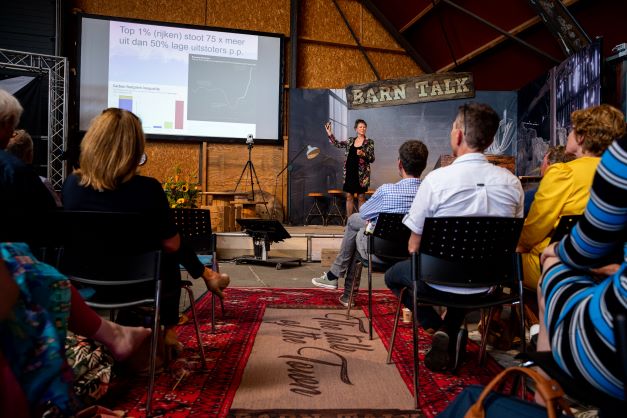
In my own contribution, I briefly outlined the Northern Netherlands’ approach to coordinating the energy transition—emphasising the importance of integrated governance models, multi actor collaboration, and cross border learning. As a practical example, I also shared key lessons from the Interreg Europe project UNLOCK – Unlocking Green Hydrogen Economy for SMEs in European Regions, showing how targeted policy support can enhance SME participation and strengthen hydrogen related governance.


A technical visit to FCLAB (Fuel Cell Lab) demonstrated how research infrastructure can anchor a region’s transition strategy. Participants explored testing platforms and system integration environments supporting fuel cell development, hybrid systems, and hydrogen related power electronics.
What became most apparent, however, was the lab’s role within a coordinated regional ecosystem. Operating within Bourgogne–Franche-Comté’s “Hydrogen Territory” strategy, FCLAB connects research, industry partners, skills development, and regional policy. This integration illustrated how technological progress accelerates when governance frameworks effectively link innovation, deployment, and workforce development.
Across discussions, a central insight emerged: regional identity shapes transition pathways. Bourgogne–Franche-Comté’s engineering tradition, the Northern Netherlands’ living lab approach, and the institutional contexts in Spain, Albania, and Poland all influence how these regions design their strategies.
Yet the challenges remain remarkably similar:
The Living Lab created space to compare approaches and begin shaping collective responses.
The second day at CCI Besançon highlighted the importance of skills and talent. International STARS EU student teams presented solutions to real transition challenges identified by regional stakeholders. Their work demonstrated not only technical creativity but an understanding that the energy transition is a socio technical, multi actor process—and that future professionals must be equipped to work across disciplines and sectors.
The STARS EU Living Lab kick off underscored a fundamental lesson: successful energy transition depends on cooperation—across regions, institutions, sectors, and borders. Technology alone cannot deliver the systemic shifts Europe needs. Effective governance, long term planning, and shared learning are equally essential.
As the Living Lab moves into its next phase, we will continue fostering this collaborative spirit through cross regional working groups, shared methodologies, and community driven projects. Hanze University and the Centre of Expertise Energy – Entrance remain committed to contributing to a more coherent, resilient, and inclusive European energy transition.
Images: Dr Beata Kviatek