26 November 2026
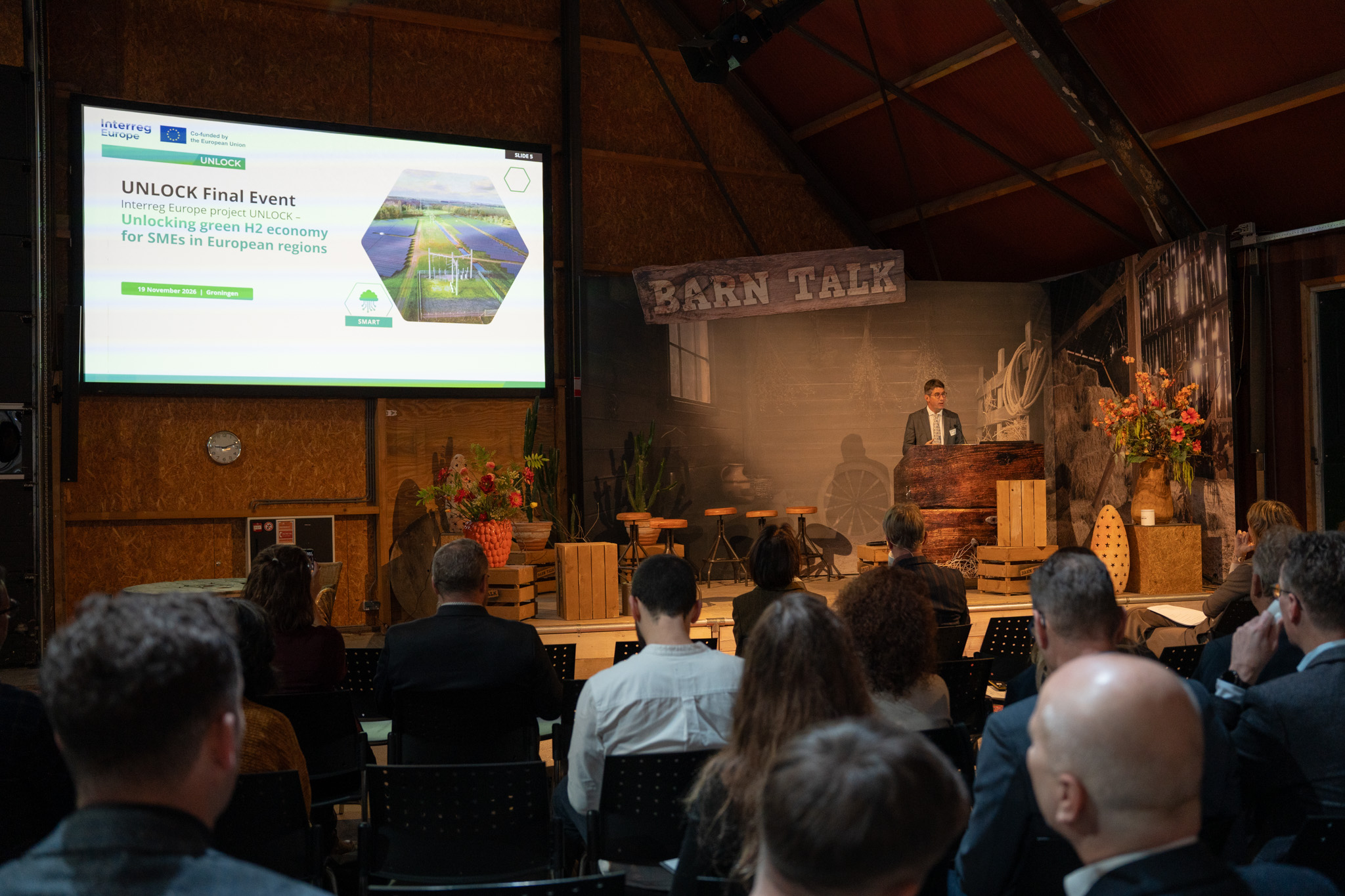
After more than three years of collaboration, the Interreg Europe project UNLOCK has demonstrated that successful regional innovation does not start with technology, but with collaboration. During the Final Dissemination Event on 19 November 2026 in Groningen, ten European partner organisations presented the project’s key findings and the lessons that other regions can take away.
UNLOCK supported policy improvements across several regional instruments, identified 21 examples of good practice and helped regions to better align innovation policy with the needs of SMEs. The central question during the event was therefore not how hydrogen technology works, but how regional ecosystems can be structured in such a way that businesses can actually participate in new economic developments.
“Legacy is not what a project stores. Legacy is what people and orginisations continue to use.
– Beata Kviatek, Project Leader UNLOCK –
UNLOCK brought together partners from various European regions to exchange experiences on innovation, entrepreneurship and economic transitions. What began as a project focusing on the conditions for the development of the green hydrogen economy evolved into a broader exploration of the factors that actually enable innovation in regions.
One of the key conclusions is that policy measures become more effective when SMEs are involved in their development from the outset. Furthermore, successful innovation appears to depend on strong links between public authorities, research institutions, businesses and civil society organisations.
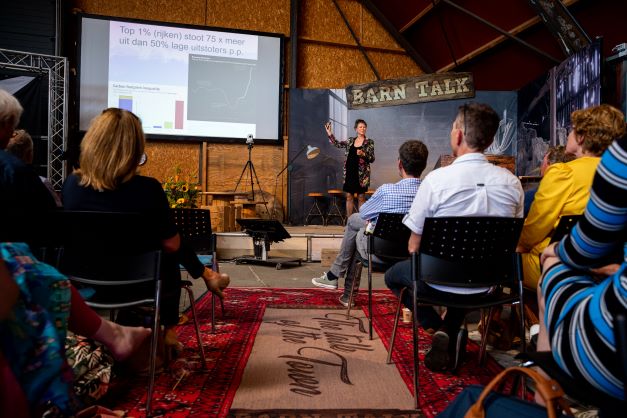
During interactive round-table discussions, participants discussed topics such as industrial symbiosis, SME involvement, governance and policy implementation. Despite the significant differences between the participating regions, similar challenges emerged: how do you reach out to entrepreneurs, how do you organise collaboration between public and private sector organisations, and how do you translate knowledge exchange into concrete policy changes?
The discussions confirmed that there is no one-size-fits-all approach. However, it became clear that regions can learn a great deal from one another when successful methods are adapted to the local context.
The impact of UNLOCK extends beyond the mere sharing of knowledge. The project led to improvements in regional policy instruments, new action plans and the further strengthening of regional innovation ecosystems. In addition, dozens of stakeholders from government,
education and the business sector were involved in developing future-proof regional strategies.
The shared experiences demonstrate that technological innovation can only be successful if attention is also paid to skills, governance, collaboration and entrepreneurship.
Although UNLOCK is formally coming to an end, the methods, networks and policy lessons developed will remain available to regions across Europe. The closing event therefore did not focus on the end of the project, but on how the knowledge gained can be applied in the future.
The key message of the day was clear: sustainable regional development arises when policy, knowledge and entrepreneurship reinforce one another. By giving SMEs an active role and prioritising regional cooperation, innovation ecosystems can emerge that continue to grow even after project funding has ended.
UNLOCK – Unlocking Green Hydrogen Economy for SMEs in European Regions – was co-funded by the European Union through the Interreg Europe programme.