26 November 2026
How do you turn ambition into action? That question was the focus of the UNLOCK site visits on 20 November 2026. Following the Final Dissemination Event, partners and stakeholders from ten European regions visited three organisations that, together, demonstrate how a hydrogen economy is taking shape in practice: Gasunie, Holthausen and Groningen Seaports.
The site visits highlighted that successful hydrogen development requires more than just new technology. Infrastructure, entrepreneurship, market development and collaboration between public and private sector stakeholders must go hand in hand. For the participating regions, the site visits provided concrete insights into the enabling conditions needed to develop new economic activities centred on hydrogen.
‘Throughout the project, we discussed ecosystems, governance and collaboration at length. During these site visits, partners were able to see how these concepts work in practice. That makes knowledge-sharing much more effective.’
– Beata Kviatek, Project Leader UNLOCK –
At Gasunie, participants gained an insight into the crucial role of infrastructure in the development of a hydrogen economy. The construction of the national hydrogen network demonstrates how existing natural gas pipelines can be repurposed for future hydrogen flows.
For many UNLOCK regions, this provided a concrete example of how a long-term vision, public leadership and investment certainty can contribute to the development of new markets. The message was clear: without a reliable transport network, the production, distribution and use of hydrogen will struggle to develop on a large scale.
Whilst Gasunie is laying the foundations, Holthausen demonstrated how hydrogen is already being used today. The participants were introduced to hydrogen-electric vehicles and gained an insight into the production and supply of certified green hydrogen for the mobility sector.
The visit underlined that the technology is available and works in practice. At the same time, it became clear that the next challenge lies in market development, regulation, investment and adoption by businesses. It was precisely these enabling conditions that were central to UNLOCK.
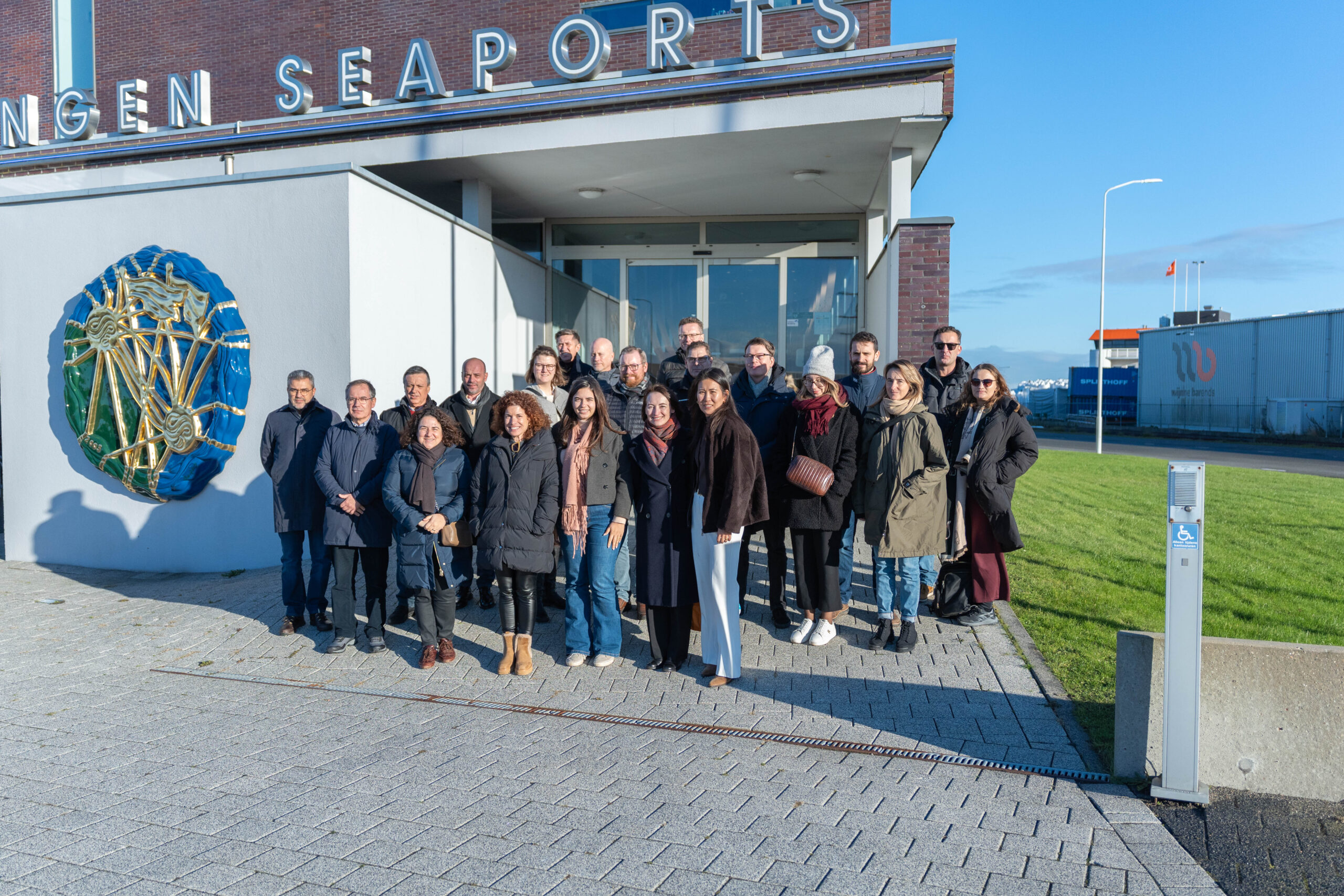
The final stop took the group to Eemshaven, where Groningen Seaports is working on the further development of an integrated energy and industrial cluster.
Here, it became clear how different parts of the hydrogen value chain reinforce one another. Renewable energy, port infrastructure, industrial activities and new hydrogen initiatives together create the conditions in which new value chains can emerge and grow.
For the UNLOCK partners, this confirmed one of the key lessons from the project: innovation does not arise within individual projects, but within regional ecosystems in which businesses, research institutions and public authorities work together.
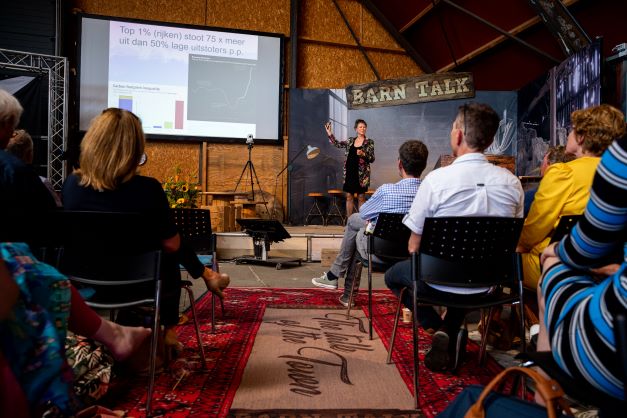
The site visits provided a practical complement to the discussions during the Final Dissemination Event. Whilst the focus on 19 November was on policy lessons, governance and regional innovation ecosystems, 20 November demonstrated how these principles can be applied in practice.
The visits to Gasunie, Holthausen and Groningen Seaports highlighted how infrastructure, entrepreneurship, innovation and collaboration reinforce one another. For the participating regions, this provided not only inspiration but also concrete examples that can contribute to the further development of their own regional ecosystems.
Thus, the site visits not only marked the conclusion of the UNLOCK project, but above all served as an illustration of the central message that emerged with increasing clarity throughout the project: sustainable economic transitions arise when technology is supported by strong ecosystems, committed entrepreneurs and effective collaboration between public and private sector partners.