7 juni 2026
When we talk about the energy transition, we often focus on renewable energy sources, electrification, and reducing CO₂ emissions. Yet one important factor is frequently overlooked: the materials we use every day. Single-use plastic products such as cups, food containers and cigarette butts are deeply embedded in our consumption patterns and require large amounts of fossil energy to produce.
This insight formed the starting point of my research project at Entrance – Centre of Expertise Energy, where I studied the Dutch implementation of Article 10 of the European Single-Use Plastics Directive (SUPD). Article 10 focuses on awareness-raising measures and the stimulation of reuse as a way to reduce plastic waste. My research examined why these reuse-oriented ambitions are not yet fully realised in the Netherlands, and how this affects broader sustainability transitions.
The core problem identified in my research is that Article 10 of the SUPD has been implemented in a limited way in Dutch policy. Evaluation reports show that, in practice, not enough is being done to actively stimulate reuse systems. A frequently cited example is the festival sector. Due to policy exceptions, many festivals continue to rely heavily on single-use plastics, resulting in large volumes of plastic waste despite the directive’s objectives.
To understand how this situation emerged, my research analysed three important aspects. First, I examined how Article 10 was transposed into Dutch policy. Second, I analysed which stakeholders influenced this process, including ministries, municipalities, industry organisations and event organisers. Third, I identified the main institutional, communicational and behavioural barriers that arose during implementation.
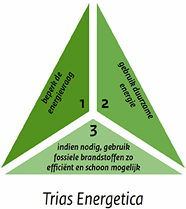
But how does this connect to the energy transition? Producing single-use plastic products is highly energy-intensive and relies largely on fossil resources. Recycling is often presented as the solution, and while recycling is an improvement over disposal, it still requires significant amounts of energy. Reuse, by contrast, consumes considerably less energy because products are used multiple times without the need for repeated processing. From the perspective of the Trias Energetica, reuse therefore represents a higher-level strategy: reducing energy demand before focusing on cleaner energy supply.
Strengthening Article 10 and promoting reuse systems more effectively would not only reduce plastic waste, but also lower overall energy consumption. This means fewer renewable energy sources are needed to meet demand, indirectly supporting the energy transition.
In the Netherlands, the SUPD has mainly been implemented through the Regeling kunststofproducten voor eenmalig gebruik. An evaluation of the first years of this regulation reveals several persistent issues. Rules and definitions are often unclear, leaving entrepreneurs uncertain about what exactly is required. Affordable and practical alternatives are not always available, particularly for smaller organisations. Financial instruments, such as additional fees on single-use plastics, have proven ineffective in changing consumer behaviour. As a result, behavioural change among consumers remains limited.
In addition, communication between different levels of government and stakeholders has been fragmented. Responsibilities are spread across ministries, municipalities and enforcement bodies, which creates confusion in practice.
Finally, Dutch policy continues to prioritise recycling over reuse, allowing existing systems to remain dominant while reuse-oriented initiatives struggle to scale up.
To address these challenges, I developed a roadmap as an intervention. The core idea is simple: much of the information needed to implement reuse systems already exists, but it is scattered across reports, pilots and local initiatives. The roadmap brings this information together in one structured overview.
It offers municipalities practical guidance by presenting best practices, implementation steps, stakeholder engagement strategies and common barriers. By lowering the threshold for action, the roadmap makes it easier for local governments to design and test reuse-oriented policies. This, in turn, can lead to more pilot projects, greater visibility of successful reuse systems and, ultimately, broader adoption.
By strengthening the practical implementation of Article 10, the roadmap helps move reuse from an exception to a standard practice. In doing so, it not only supports the circular plastic transition, but also contributes to reducing energy demand, showing that material policy and energy policy are more closely connected than we often assume.
A blog by Jeffrey Moltmaker, master student Energy for Society
Participated in the professorship Communication, Behaviour & Sustainable Society