7 juli 2026
The Interreg Europe project UNLOCK – Unlocking Green Hydrogen Economy for SMEs in European Regions contributed its policy improvement methodology and emerging lessons learned to partners of the Green Hydra project during a study visit hosted at Entrance’s Living Lab in Groningen. The event brought together policymakers, researchers and regional development stakeholders working to strengthen green hydrogen ecosystems and improve support for small and medium-sized enterprises (SMEs).
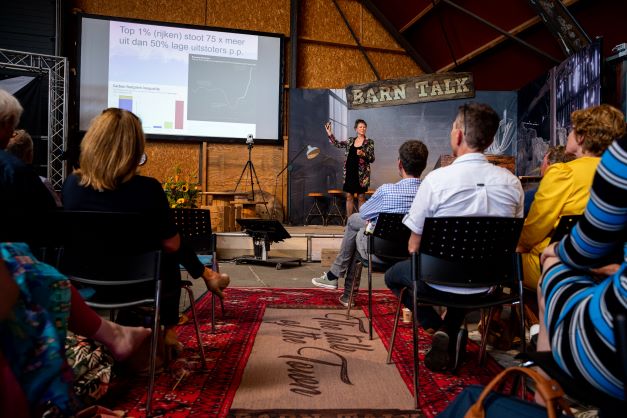
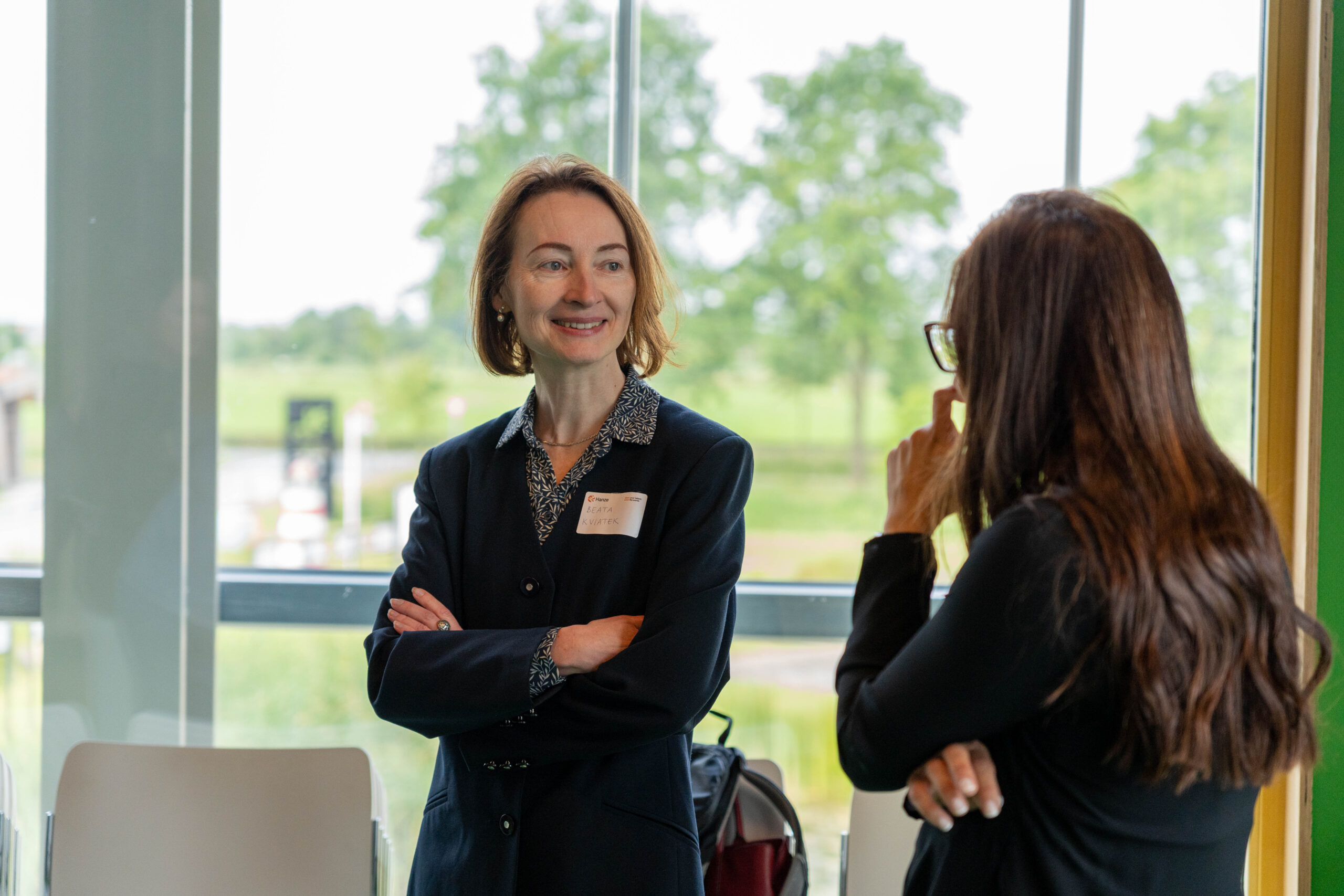
As Project Leader of UNLOCK, Dr Beata Kviatek, Jean Monnet Chair in Sustainable EU Economy at Hanze University of Applied Sciences Groningen, delivered an interactive session on policy improvement and SME engagement in the hydrogen economy. The session drew upon experiences gained through UNLOCK, which started one year before Green Hydra and has been developing a structured methodology for improving regional policy instruments that support SME participation in emerging hydrogen ecosystems.
The exchange reflected a core objective of the Interreg Europe programme: enabling regions to learn from one another and improve public policies through cooperation, knowledge sharing and the transfer of experience. By sharing methodologies, policy models and early project results, UNLOCK contributed knowledge that Green Hydra partners can adapt and apply within their own regional policy contexts.
A key message of the session was that both UNLOCK and Green Hydra are addressing the same fundamental challenge: how regional policies can more effectively enable SMEs to participate in the green hydrogen economy. While hydrogen initiatives frequently focus on infrastructure, production capacity, market development, investment needs or technological innovation, the question of how public policies can help SMEs access these opportunities often receives less attention. Yet SMEs represent a significant part of regional economies and are essential contributors to innovation, supply chains and local economic development.
It is precisely this challenge that UNLOCK seeks to address. Rather than focusing primarily on broader market developments, the project examines the practical barriers that prevent SMEs from participating in hydrogen value chains. These barriers may include fragmented governance structures, complex administrative procedures, regulatory uncertainty, limited access to project networks or policy instruments that are difficult for smaller businesses to navigate. UNLOCK’s central innovation is the development of a policy improvement methodology specifically designed to identify such barriers and translate them into targeted improvements of existing policy instruments.
During the workshop, Dr Kviatek presented the UNLOCK Policy Improvement Methodology, a structured framework that helps policymakers move from strategic ambitions to concrete and measurable policy action. The methodology guides regional authorities through defining the policy context, identifying SME-specific barriers, designing realistic policy improvements, assigning implementation responsibilities and establishing measurable indicators of success. A central principle is that policy improvements should be practical, actionable and understandable from the perspective of SMEs, while remaining feasible within existing administrative and policy frameworks.
The interactive session encouraged Green Hydra partners to reflect on the challenges faced by SMEs in their own regions and to consider how existing policy instruments could be improved. To support this discussion, participants explored several policy models developed within UNLOCK, including an SME Hydrogen Voucher Scheme, a Regional Hydrogen Coordination Platform, an SME Cluster and Pilot Access Programme, and a Hydrogen Regulatory Sandbox. These examples demonstrated different ways in which policy instruments can lower barriers, improve coordination and create more accessible pathways for SME participation in hydrogen projects.
As a project that began one year earlier than Green Hydra, UNLOCK was able to share not only policy concepts but also practical experience from applying its methodology across different European regions. This enabled Green Hydra partners to benefit from tested approaches, emerging lessons and policy models already developed within the project. Such exchanges help regions accelerate their learning processes, avoid duplication of effort and build upon knowledge generated elsewhere.
The study visit also highlighted the role of Entrance and Hanze as platforms where applied research, policy innovation and international cooperation come together to support the energy transition. By hosting the event and contributing expertise through UNLOCK, Hanze demonstrated its commitment not only to technological innovation in hydrogen, but also to the development of effective policy frameworks that help regional stakeholders benefit from new economic opportunities.
The exchange between UNLOCK and Green Hydra demonstrated how Interreg Europe projects can strengthen one another through shared learning and policy innovation. The contribution of UNLOCK was not separate from or supplementary to Green Hydra’s objectives; rather, it directly supported a common mission shared by both projects. Both initiatives recognise that successful regional green hydrogen ecosystems require more than technological development or market growth alone. They also require effective public policies that enable SMEs to participate, innovate and grow.
By sharing its methodology, policy models and practical experience in Groningen, UNLOCK contributed directly to the policy-learning process of Green Hydra while reinforcing its own mission of improving regional policy instruments for SMEs. The exchange illustrated the value of cross-project cooperation within Interreg Europe and demonstrated how collaborative learning can help regions develop more effective, accessible and measurable policies for SME engagement in Europe’s evolving green hydrogen economy.